
DevOps and Continuous Integration: Building Resilient Software Delivery Pipelines
Master DevOps practices and CI/CD pipelines that enable faster, more reliable software delivery, covering automation, containers, orchestration and monitoring.
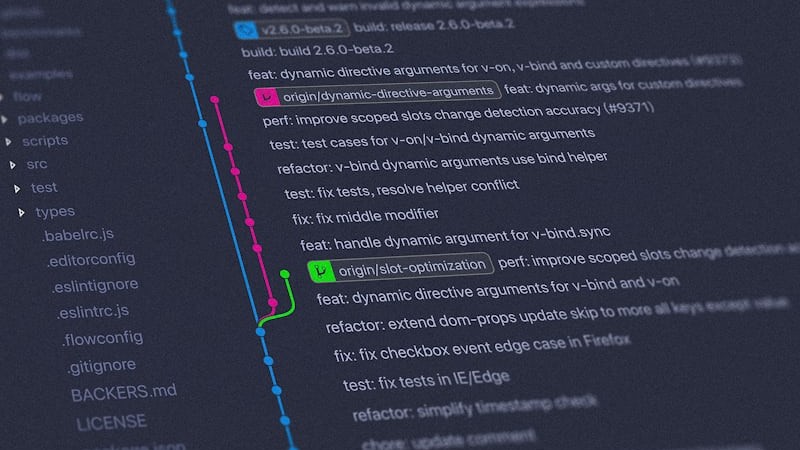
Modern software development is not only about writing code. It is about delivering value quickly, reliably and repeatedly. That is the job of DevOps and continuous integration and delivery.
DevOps is not a tool. It is a change in how teams work, one that removes the wall between development and operations and introduces automation at every step of the lifecycle. Done properly it produces resilient pipelines, fast releases and deployments nobody dreads. At e10 Infotech we design and implement DevOps architectures that scale with the team and evolve with the business.
What DevOps actually is
DevOps is a practice that integrates development, operations, security and quality assurance into one streamlined flow. Three goals sit underneath it: ship code faster without breaking things, automate repetitive work so human error has fewer opportunities, and build a system that recovers from failure instead of pretending failure will not happen.
What CI/CD pipelines give you
- Faster release cycles. Changes reach production in minutes rather than weeks
- Better code quality. Automated tests catch regressions before a human sees them
- Genuine collaboration. Shared responsibility for delivery produces better outcomes than handoffs
- Security by construction. Controls run inside the pipeline rather than in a review meeting
- Instant rollback. Reverting to a known good build becomes routine instead of heroic
The core components of a pipeline
1. Version control
Everything starts with clean Git practice: short lived branches, meaningful commits, protected main, and review that is fast enough that people actually use it.
2. Automated testing
Unit, integration and end to end tests running on every commit. The suite must be fast enough that developers do not learn to ignore it.
3. Build automation
GitHub Actions, GitLab CI or Jenkins producing identical artefacts across environments, with build caching so feedback stays quick.
4. Artifact repositories
Store build outputs such as container images and binaries in Artifactory, Docker Hub or GitHub Packages, with immutable tags and retention policy.
5. Containerisation with Docker
Package applications into portable containers that behave identically in development, staging and production, which removes an entire class of environment bug.
6. Orchestration with Kubernetes
Deploy and scale containers reliably using Kubernetes, Helm and GitOps tooling such as ArgoCD or Flux, so the cluster state matches a reviewed repository.
7. Monitoring and logging
Prometheus, Grafana, the ELK stack or Datadog watching health, latency, saturation and errors, with alerts that point at a runbook.
8. Security in the pipeline
Static and dynamic analysis, dependency scanning and secrets management as pipeline stages. Our notes on cyber resilience cover the wider control set.
Best practices that hold up under pressure
Shift testing left
Test early and often. A failure caught on a developer's branch costs a fraction of one caught in production.
Fail fast, recover faster
Automate rollback and alerting. Mean time to recovery matters more than mean time between failures.
Treat infrastructure as code
Terraform, Pulumi or AWS CDK, reviewed like application code, so environments are reproducible rather than remembered.
Make security a default
Embed scanning, policy checks and secrets handling in every stage so the compliant path is also the quickest path.
Roll out gradually
Blue-green or canary deployments with live monitoring, so a bad release affects a slice of traffic rather than all of it.
Treat everything as code
Not only infrastructure. Policies, configuration, dashboards, alert rules and runbooks all belong in version control. If a change to production cannot be reviewed as a diff, it will eventually be made at 2am by somebody guessing.
What e10 Infotech builds
We help teams build delivery pipelines matched to their stack, scale and release cadence:
- CI/CD implementation with GitHub Actions, GitLab, CircleCI and Jenkins
- Kubernetes setup, scaling, cost control and monitoring
- Docker based workflows with genuine environment parity
- GitOps with ArgoCD and Flux
- Infrastructure provisioning with Terraform
- Secure pipeline design covering SAST, DAST and secrets management
- Monitoring, alert routing and on-call playbooks
Delivered projects include Kubernetes based CI/CD for a fintech startup running more than 100 deployments a month, a DevSecOps pipeline for a healthcare SaaS company under HIPAA constraints, a monolith decomposed into microservices with full GitOps automation, and multi-cloud pipelines across AWS and Azure with centralised observability. The same foundations sit under the applications we ship through web development, and they are usually the first thing we fix in a wider digital transformation programme.
Build a system that recovers from failure instead of one that pretends failure will not happen.Platform engineering team
Ready to modernise your delivery pipeline?
Whether you are starting DevOps or scaling a complex platform, we can automate the path from commit to production.
Queries raised before signature
Everything worth knowing about DevOps and Continuous Integration: Building Resilient Software Delivery Pipelines.
01What is the difference between continuous delivery and continuous deployment?
Continuous delivery keeps every build ready to release, with a human approving the final push. Continuous deployment removes that gate and releases automatically once checks pass. Most teams should reach reliable delivery before removing the gate.
02How long does it take to set up a CI/CD pipeline?
A working pipeline for a single service typically takes one to three weeks including tests, artefact storage and a deployment path. Rolling the pattern across a larger estate takes longer and is mostly standardisation work.
03Do we need Kubernetes?
Not always. If you run a handful of services with predictable load, managed container platforms or serverless will cost less to operate. Kubernetes earns its complexity when you have many services, multiple teams and real scaling requirements.
04How do we stop the test suite becoming the bottleneck?
Split it by cost: fast unit tests on every commit, integration tests on merge, and full end to end runs on a schedule or before release. Parallelise, remove flaky tests aggressively, and track suite duration as a metric.
05What does GitOps change in practice?
Cluster state is declared in a repository and an operator reconciles reality to match it. You get audit history, reviewable changes, and a recovery path that is simply reapplying the repository rather than remembering what was clicked.
06Where should secrets live?
In a dedicated manager such as Vault, AWS Secrets Manager or the cloud native equivalent, injected at runtime with short lived credentials. Never in the repository, never in plain environment files committed by accident.
07How do we measure whether DevOps is working?
Track deployment frequency, lead time from commit to production, change failure rate and time to restore service. Those four move together, and improving them is the point of the exercise.
08Is DevSecOps a separate programme?
No, it is the same pipeline with security stages included. Dependency scanning, static analysis, image scanning, policy checks and secrets detection run as build steps, so security findings arrive as build feedback rather than an audit surprise.
09Can we adopt DevOps with a legacy monolith?
Yes, and it is often the fastest win available. Add version control discipline, automated builds and a repeatable deployment first. Decomposition can follow later once releasing is no longer frightening.
10What should on-call look like for a small team?
A short rotation, alerts only for conditions a human can act on, a runbook per alert, and a rule that every page either gets automated away or reclassified. Alert fatigue destroys reliability faster than any outage.
11Blue-green or canary?
Blue-green is simpler and suits releases you want to switch and verify wholesale. Canary suits high traffic services where you want to expose a small percentage first and watch error rates before proceeding.
12How does e10 Infotech usually start an engagement?
With an assessment of your current build, test and release path, then a pilot pipeline for one representative service. Once that pattern proves out, we template it and roll it across the remaining services with your team.
Sign off and we start
Tell us what you are trying to build. You will hear back from an engineer, not a sales desk.
- For
- e10 Infotech Private Limited
- Office
- Mumbai, Maharashtra
- Established
- 2011
- Direct line
- +91 86574 40720